

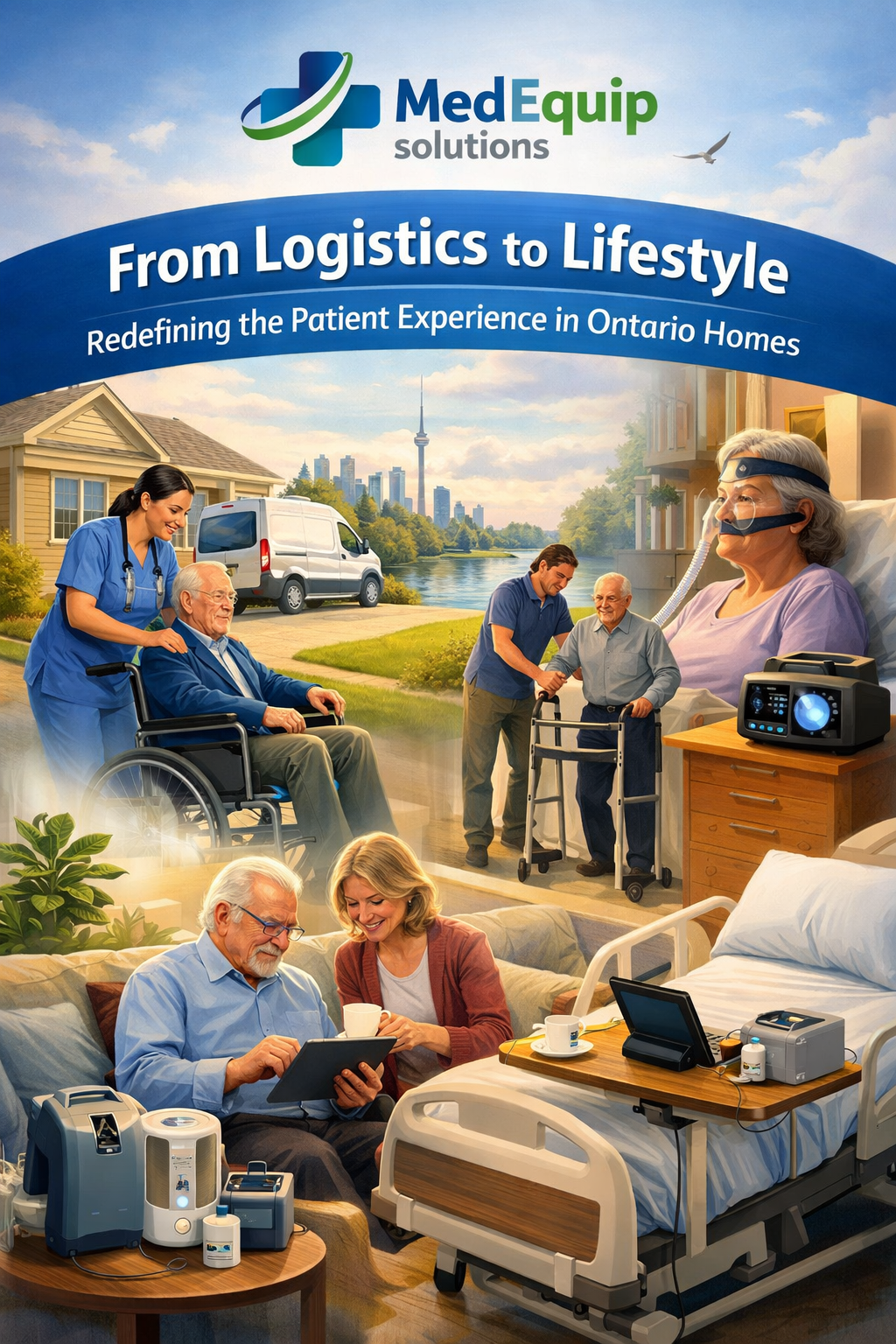
For decades, people only considered the transition from a hospital ward to a home environment in terms of logistics. It was a checklist: Are the prescriptions all filled? Is the transport arranged? Is the patient stable? With the front door closed, the clinical world was left outside, and so was the patient, often in a “medicalized” version of their living room—permeated by cold steel, grey plastics, and isolation.
And, as Ontario enters 2026, the province is at the forefront of changing this story worldwide by implementing innovative home recovery programs that prioritize patient comfort and well-being, thereby redefining the concept of healthcare delivery. Home recovery has become more than just a matter of survival; it’s about the lifestyle of healing. In cities like Toronto, Mississauga, and Brampton, the “Home-Away-From-Hospital” standard has taken hold, transforming homes into high-tech, ultra-comfort havens that come close to matching the most sophisticated clinical suites.
The Home: The Rise of the “Healing Sanctuary”
The 21st-century patient in Ontario—whether a local or a medical tourist temporarily renting long-term accommodations—expects more than functionality. They don’t want to be reliant on building recovery into their lives; they want their recovery space to naturally merge with their lifestyle. This has in turn forced medical equipment manufacturers to leave behind the “institutional” design of machines and furniture, in perception at least, in favour of a more “residential” look.
Why the Importance of Aesthetics with Transitions in Homes
9 – Psychological Agency: It repels the “patient identity” because when surrounded by familiar, high-quality furniture, people feel much more like themselves, speeding mental aid recovery.
Integration Into the Home: When home medical setups resemble expensive furniture, family members are more likely to gather in the recovery room and spend quality time with patients, alleviating loneliness.
Less Caregiver Burnout: Equipment that is easy to clean, quiet to use, and intuitive lowers family caregiver stress.
The Infrastructure Behind the Shift
It takes a world-class supply chain to make a more advanced recovery environment at home. High-end medical vacancies in the Greater Toronto Area (GTA) have skyrocketed. Hospitals, though, are linking more closely with private providers so that once a patient is discharged, the quality of their equipment doesn’t take a nosedive.
The bed is likely the most essential piece in this arrangement. The financial calculations underpinning these home-based suites, however, are not the same. For instance, the hospital bed rental price that Toronto families might consider will vary widely depending on whether they need a simple semi-electric model or a high-end “smart bed” with features like lateral rotation and air-redistributing mattresses. And those costs are increasingly viewed not as an expense but as an investment in a faster, complication-free recovery.
Anant Maheshwari, President, Microsoft Syntax: (91/2) The newly launched devices are integrated with smart home systems.
A recovery room in Ontario passes, and now we’re in the smartest room in the house, frequently 2026. Logistics are now a way of life, thanks to their IoT connectivity, which allows for seamless integration of various devices and systems that enhance patient care and comfort in the recovery room.
2026 Connected Recovery Room Features
Voice-Activated Environment: Patients with limited mobility no longer have to stretch for a remote; they can speak commands to shift the position of a bed, dim lights around them or summon help.
Remote Monitoring Hubs: A secure home hub sends vital signs directly to the patient’s clinical team, creating “virtual rounds” that can help prevent a trip to the E.R.
Biometric Bed Linens: The rental beds of today include sensors to monitor sleep cycles and pressure points, adjusting mattress firmness on its own to stave off bedsores. Biometric: Biometric is the measurement and statistical analysis of people’s unique physical and behavioural characteristics.
Reducing Barriers to Care: A Case Study in Scarborough
The “lifestyle” change is most evident in the varied residential pockets of the GTA. Providers have understood that Ontario’s diversity means a one-size-fits-all approach won’t work, necessitating tailored strategies that consider the unique needs and preferences of different cultural groups within the province.
The next focus for care coordinators was hyper-local distribution and setup that honours the disparate layout of housing types and localization of services to individual communities while aligning them with cultural practices. For many families this journey begins with acquiring a high-quality hospital bed for home use Scarborough trip when they purchase or rent one, creating a professional-grade recovery ward within what has become a multi-generational household in which single-patient care is the order of the day.
- Beyond the Bed: The Comprehensive Home Suite
- Redefining the experience Looking beyond furniture “Home Recovery Package” in 2026 typically include:
- Portable Imaging: In-home ultrasound and X-ray technicians so that elderly individuals do not have to endure the trauma of an ambulance trip for routine checks.
- Chef-Curated Recovery Meals: Specialty delivery services who work with the hospital-issued dietary plan for the patient.
- Virtual Reality (VR) Physical Therapy: Using VR headsets to gamify range-of-motion exercises for patients.
Home-First Model Economic Impact
Because Ontario’s health care system members are finally doing something astonishingly effective: improving “readmission” rates with significant drops by abandoning a hospital scale of recovery in favor ritual life revamp at home. The second is that patients providing comfort at home in a monitored environment with high-end infrastructure have lower post-op infections and falls.
That model is also drawing a new cohort of medical tourists. Perhaps serviettes or dish towels could be pressed into service, or patients could be tucked into a separate tarnished stainless-steel kitchen sink for it all to go down the drain? International patients such as these are not only coming to Ontario for the surgeon’s care but also (due in part to poor health systems back home) for a luxurious “Recovery Concierge” industry that allows them to recuperate from surgery not in a hospital ward but rather in a luxury condo or developer-owned branded home.
Conclusion: A Brand New Era in Ontario Healthcare
“Logistics to lifestyle”: the evolution of Ontario health care. Gone are the days of unplanned home care serving as a remedy for hospital overcrowding. In 2026, home is where you go to heal.
By merging the aesthetics of a ward with smart architecture and an on-demand local network, we’re making the recovery — one of the often most traumatic parts of visiting the hospital, sometimes — as dignified, aesthetic and comfortable as possible. [8] The home infrastructure now finally catching up to the same standard of performance excellence that we see for operating rooms is the creation of a healing environment at home where advanced medical technology integrates with effective recovery design.