

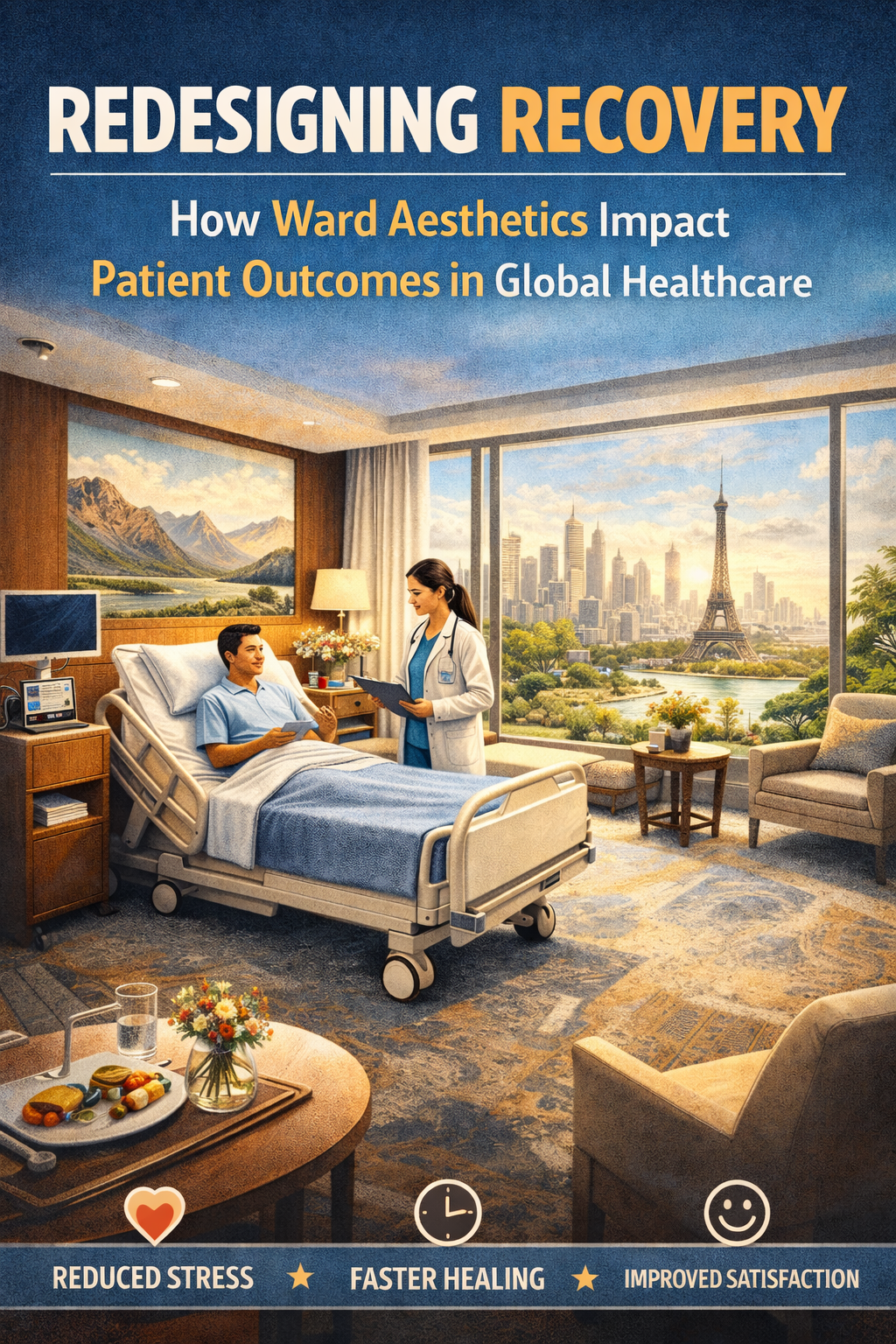
In the competitive landscape of medical tourism in 2026, the outdated “clinical” look is no longer appealing. For decades, they were these spaces with cold linoleum and very harsh fluorescent lighting and a cacophony of beeping monitors—we now know that environment is a huge barrier to healing in the hospital,” Kasozi says.
Midway through 2026, we see a massive change taking place. Today, such top medical destinations are selling not merely surgical expertise but restorative environments. From boutique clinics in Toronto to giant medical outposts in Asia, the industry has woken up to ward aesthetics not being a frill but clinical imperatives that directly influence patient recovery rates and mental health.
The Science Behind the “Healing Environment”
Why should it matter to someone recovering from major surgery what a room looks like? The solution is to cut down on “institutional stress.” It lowers cortisol levels, improves sleep quality, and reduces the need for pain medication when a patient has been made to feel they’re in a space designed not just around efficiency.
Aesthetic Pillars of 2026 Wards
- Biophilic Design: The infusion of natural wood textures, indoor greenery, and “living walls” that cleanse the air and serve as a visual link to nature.
- Circadian Lighting: Intelligent systems are used to adapt the colour temperature of the room with the natural rhythm of a day; we will help in regulating our hormones and helping us in faster sleep.
- Acoustic Zoning: Many modern wards are equipped with sound-absorbing ceiling tiles and silent alarm systems that communicate with nurses using haptic wearables instead of blaring sirens or flashing lights.
The Economic Reality Behind Infrastructure Improvements
Meeting these high aesthetic standards through Ward redesign thus requires considerable capital. Hospitals have to balance high-end finishes with the practical expense of medical-grade equipment.
For example, in large metropolitan centres, facilities managers frequently compare their budgets against local market benchmarks. The hospital bed rental cost Toronto facilities offer allows a flexible schedule of top-shelf, attractive electric beds to international patients with no permanent overhead of an entire fleet purchase. It is this modular approach to infrastructure that enables the top destinations of 2026 to maintain competitiveness.
From Hospital Suite to Home Sanctuary
The races on the infrastructure don’t end at the hospital exit. The first trend of 2026 is seamless transitioning. Patients visiting for surgical care today expect their post-operative setting to continue unchanged once they transfer to a recovery hotel or local home.
For patients who opt to convalesce in the Greater Toronto Area, specialty providers ensure that the aesthetic and functional quality of the ward comes home with them. Groups of international coordinators now routinely arrange for a high-end hospital bed to be used in the home in Scarborough or North York, so the “healing environment” stays intact from beginning to end.
Regional Design Trends Shaping 2026
Different parts of the world have their own “aesthetic stamp” on the experience of recovery:
Southeast Asia: The “Spa-Spital”
In Thailand and Malaysia, wards are often like luxury wellness retreats. By combining warm earth tones and silky textures, they leverage their well-known reputation for hospitality so that the medical component of the stay feels almost tangential to the relaxation.
The Middle East: Modern Opulence
Dubai and Riyadh are at the forefront of what I call “smart luxury.” Their wards include integrated 3D-projection walls that can alter the “view” from a patient’s bed, including gold-accented fixtures designed for maximum sterilization.
Europe and North America: The Minimalism Clinic
In the West, the trend is “quiet luxury”—clean lines, medical ports hidden from view, and high-performance textiles that evoke linen but are 100 percent antimicrobial.
Measuring the Impact: Data-Driven Design
There’s nothing subjective about 2026 aesthetics—it’s all data-backed. AI-Powered Sensors — Hospitals are now studying how varying room configurations impact
- Patient mobility: Are patients more likely to walk (key to preventing clots) if the hallways look like art galleries? (The answer here would be an emphatic yes).
- Healthcare Worker Productivity: Does a more aesthetically effluent, less cluttered workspace decrease caregiver burnout?
- Infection Rates: Do smooth, seamless designs cut down on the “hidden corners” where pathogens hang out?
Recap: Healing — The Future Is Beautiful
The line between a luxury hotel and a high-performance hospital ward will continue to blur as we look toward the rest of 2026 and beyond. The infrastructure race made it clear that patients will no longer trade off their dignity or comfort for a medical procedure.
The places that are winning the race today have acknowledged an obvious truth: The body can’t really heal if the raging mind is more than simply institutionalized. In the process of reestablishing recovery through an aesthetic frame, global healthcare is becoming (at last) about the whole patient—as opposed to just the disease.